
There is a moment, when traveling into Costa Rica’s higher elevations, when the landscape seems to change almost without warning.
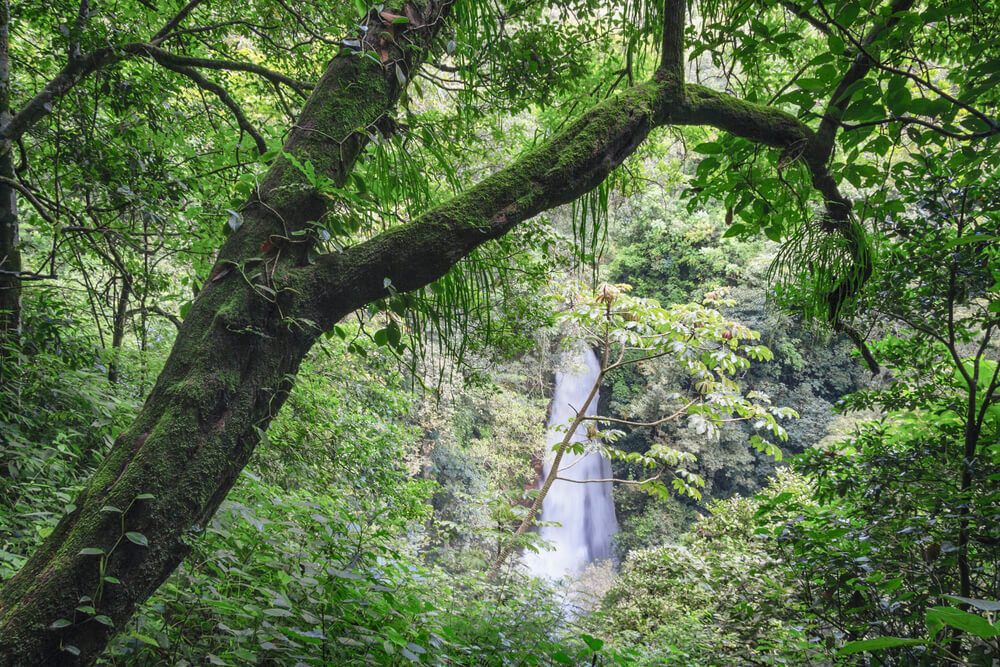
The air grows cooler. Distant slopes disappear behind passing clouds. Tree trunks become covered in moss, branches carry gardens of bromeliads and orchids, and the forest takes on a deeper shade of green. Even the light feels different as it filters through layers of leaves and drifting mist.
This is the Lower Montane Wet Forest,one of Costa Rica’s distinctive highland life zones and a landscape shaped by elevation, abundant rainfall, and long periods of mist.
Unlike the warmer forests found at lower elevations, life here unfolds under cooler conditions. The result is a dense, evergreen ecosystem where trees, epiphytes, birds, and countless smaller organisms have adapted to a world in which moisture is rarely far away.
The Lower Montane Wet Forest is found in Costa Rica’s mountainous regions, where elevation creates a noticeably cooler environment.
Rainfall is abundant, and in many areas mist remains among the trees for long periods of the day. Moist air moving across the mountains rises, cools, and condenses, surrounding the forest in clouds that can appear and disappear within minutes.
This creates an atmosphere that is constantly changing.
A trail may begin under clear skies and, moments later, become wrapped in mist. Drops of water collect on leaves and branches, while the forest floor remains sheltered beneath layers of vegetation.
These conditions influence nearly every aspect of life here, from the height and structure of the trees to the remarkable number of plants growing directly on their trunks and branches.
One of the most striking features of the Lower Montane Wet Forest is the abundance of epiphytes.
Orchids, bromeliads, mosses, lichens, and ferns use trees as places to grow, creating entire miniature ecosystems above the forest floor. They are not parasites; instead, they take advantage of the light, moisture, and organic material available high in the canopy.
A single mature tree can support an extraordinary community of life.
Water collects between bromeliad leaves, creating tiny reservoirs used by insects and other small organisms. Mosses retain moisture, while orchids find space among branches where sunlight filters through the canopy.
The result is a forest that seems to grow in every direction.
Life is not limited to the soil below. It covers trunks, hangs from branches, settles into cracks, and occupies almost every available surface.
In parts of Costa Rica, native oaks become an important feature of these highland forests.
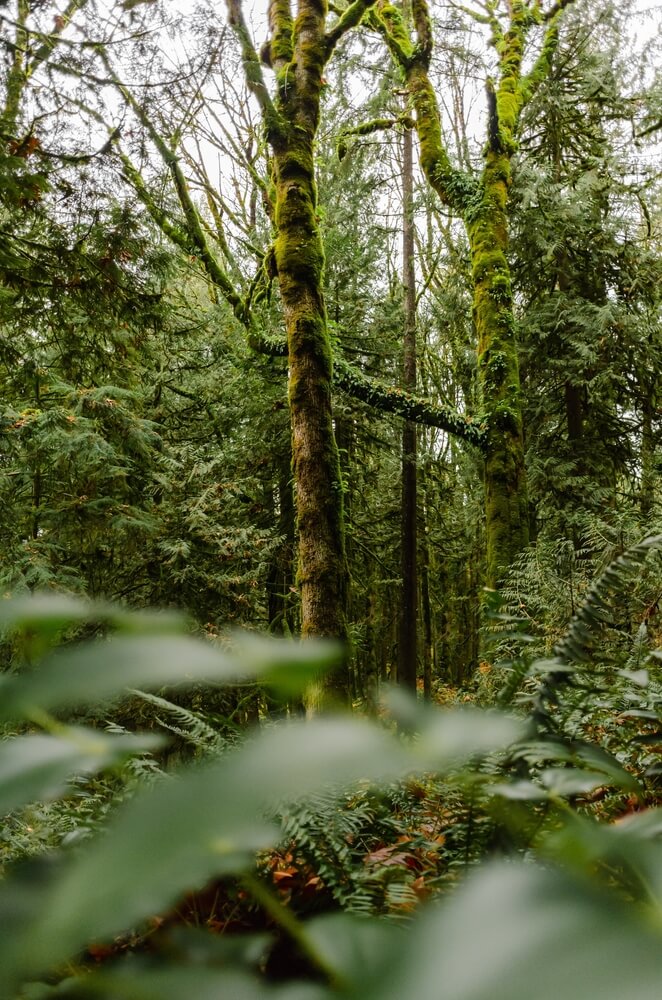
The Cordillera de Talamanca, in particular, contains forests where several species of the genus Quercus form impressive stands. Alongside them grow other trees adapted to cooler mountain conditions, including species of magnolia, alder, and many other native plants.
These forests are generally evergreen, with vegetation arranged in layers that provide habitat from the forest floor to the canopy.
Fallen leaves and branches slowly decompose in the cool, humid environment, returning nutrients to the soil. Fungi perform an essential role in this process, while moss-covered logs become nurseries where young plants begin their lives.
Nothing in the forest is truly wasted. Even a fallen tree becomes the foundation for another generation.
The complex structure of the Lower Montane Wet Forest creates habitat for an equally fascinating variety of wildlife.
Birds are among its most visible inhabitants. Highland forests provide food, shelter, and nesting sites for species adapted to cooler elevations, making these landscapes particularly rewarding for birdwatching.
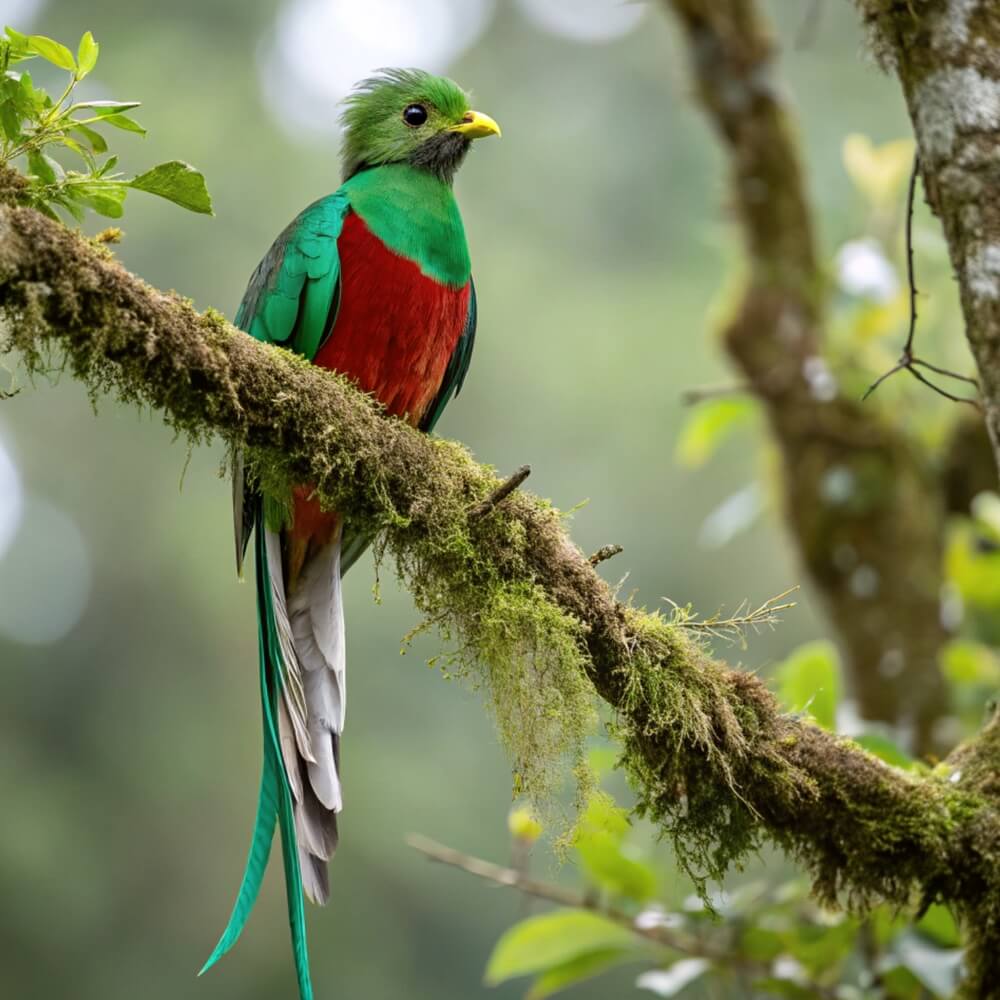
In the Talamanca highlands, the surrounding mountain forests form part of the habitat associated with one of Costa Rica’s most celebrated birds: the resplendent quetzal. Other birds move through the canopy in search of fruits, insects, and flowering plants, while hummingbirds visit blossoms scattered throughout forest clearings and edges.
Mammals are often more difficult to observe, but they are an important part of the ecosystem. Small mammals, bats, and larger forest species use these mountain habitats and the biological corridors that connect them to neighboring ecosystems.
Amphibians and insects also depend on the cool, moist conditions found among streams, leaf litter, and dense vegetation.
The forest may sometimes seem quiet, but much of its life is simply hidden.
One of the most remarkable places associated with this life zone is Los Quetzales National Park, in the Cordillera de Talamanca. The park protects a combination of high-elevation ecosystems, including areas of Lower Montane Wet Forest characterized by mist, mountain slopes, and forests where native oaks are an important part of the landscape.
In the Central Volcanic Range, the Grecia Forest Reserve also protects this life zone alongside wetter montane forests. Its protected landscapes contribute to the conservation of forest cover and important mountain watersheds.
Closer to the Central Valley, the Cerros de La Carpintera Protected Zone contains several life zones, including Lower Montane Wet Forest, demonstrating how dramatically ecosystems can change across relatively short distances in Costa Rica’s mountainous terrain.
Farther south, the Las Tablas Protected Zone protects another important landscape where this forest occurs alongside other highland ecosystems.
Together, these places reveal that the Lower Montane Wet Forest is not a single uniform landscape. Its character changes with elevation, topography, exposure to moisture, and the surrounding mountains.
The importance of these forests extends far beyond their biodiversity.
Mountain vegetation helps protect steep slopes, reducing erosion and maintaining the stability of fragile soils. Forest cover also supports watersheds by slowing the movement of rainfall through the landscape and helping maintain the streams and rivers that flow toward lower elevations.
These ecosystems also provide connections between different altitudinal zones.
For wildlife, those connections are essential. Species may move across elevations in response to food availability, seasonal changes, or shifting environmental conditions. Continuous forest allows those movements to happen.
As climate patterns change, protecting connected mountain landscapes may become increasingly important, giving species more opportunities to adjust their ranges.
The Lower Montane Wet Forest is resilient, but it is not invulnerable.
Land-use change, fragmentation, and the loss of forest connections can affect species that depend on specific highland conditions. Climate change presents another challenge, particularly for organisms whose survival is closely linked to temperature, moisture, and elevation.
Protected areas help preserve significant portions of this ecosystem, but conservation also depends on maintaining connections between them.
Every forest fragment can contribute to a larger network of life.
The Lower Montane Wet Forest reveals itself slowly.
Its beauty is found not only in panoramic mountain views, but in the details: an orchid growing high on an old branch, droplets gathered on a bromeliad, a moss-covered trunk, or the sudden movement of a bird disappearing into the canopy.
It is a forest that invites curiosity.
For travelers exploring Costa Rica’s highlands, these landscapes offer a completely different expression of the tropics—cooler, quieter, and layered with life from the ground to the highest branches.
Here, the mountains do more than rise above the landscape.
They create a world of their own.
©2024 - 2026 GoNat Tour Operator, by Luzk. Todos los Derechos Reservados