
Before sunrise on September 15, while much of Costa Rica is still dark, music begins to break the silence.
In some communities, bands and musicians take to the streets at around five in the morning. Drums, wind instruments, and familiar patriotic melodies announce that Independence Day has arrived.
This tradition is known as La Diana.
Hours later, students will march through streets decorated in blue, white, and red. But Costa Rica’s Independence Day does not begin with the parade.
In many ways, it has already been unfolding for days.
A flame has traveled across Central America. Communities have gathered on the eve of Independence. Children have illuminated the streets with handmade lanterns, and the National Anthem has been sung across the country.
Behind all these traditions is an unusual story.
Because when Central America declared independence on September 15, 1821, Costa Rica did not know it had happened.
The news was still on its way.
In 1821, Costa Rica formed part of the Captaincy General of Guatemala, a territory of the Spanish Empire that included much of present-day Central America.
Across Latin America, independence movements were transforming the political landscape, and Central America was approaching a historic decision of its own.
On September 15, 1821, representatives gathered in Guatemala City and signed the Act of Independence of Central America, separating the region from Spanish rule.
Today, Guatemala, El Salvador, Honduras, Nicaragua, and Costa Rica commemorate their independence on that date.
But imagine communication in 1821.
There were no telephones, radios, highways, or instant messages. Costa Rica lay hundreds of kilometers from Guatemala City, separated by mountains, rivers, difficult roads, and political jurisdictions.
News traveled at the speed of horses and human messengers.
September 15 therefore came and went without celebrations in Costa Rica.
The documents announcing the political changes eventually reached Cartago in October. Costa Rica then faced its own decisions about what independence meant and what political path should follow.
More than two centuries later, one of the country’s most important Independence traditions recreates that original journey of the news.
Only now, the message travels as fire.
The Central American Independence Torch does not begin its journey at the Costa Rican border.
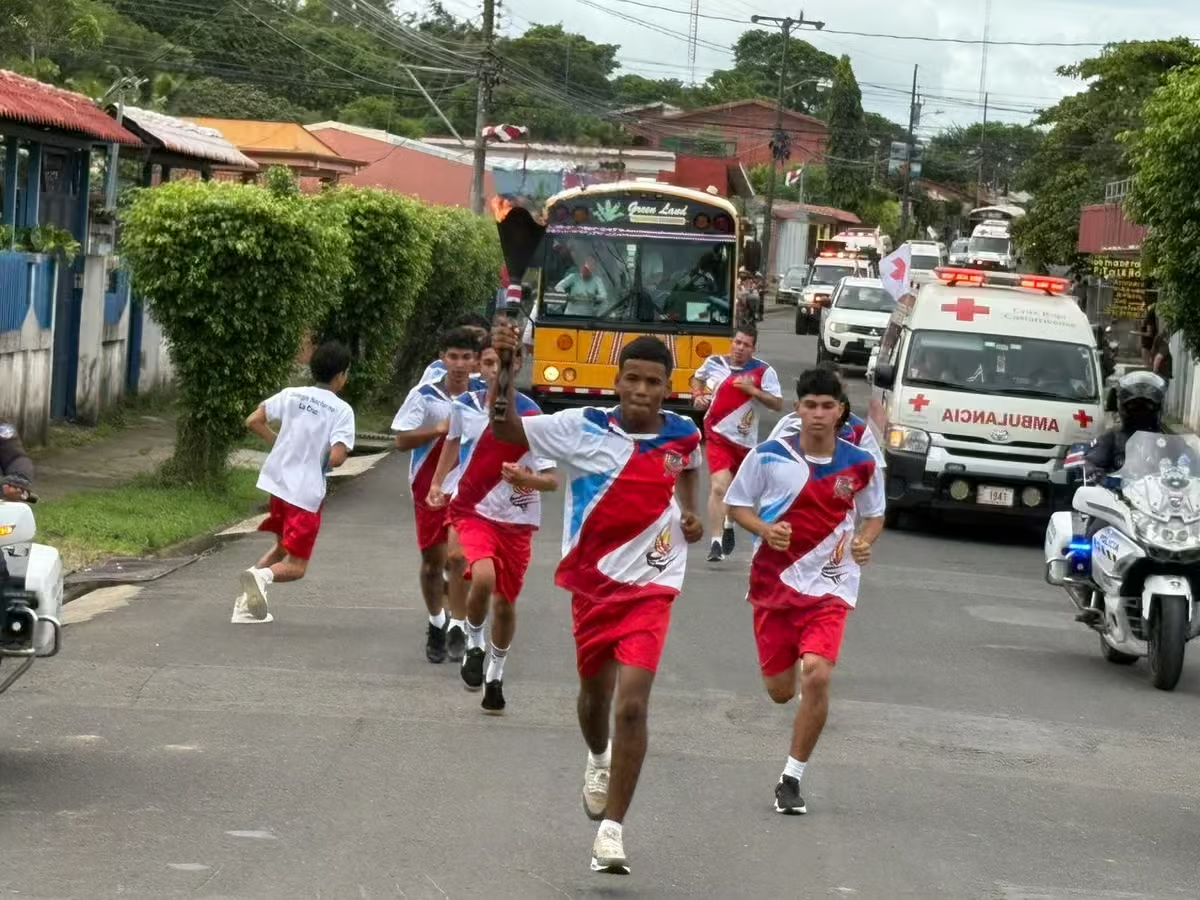
Its route starts in Guatemala, at the Monument to the Heroes of Independence, and continues south through Central America, carried in relays largely by students.
The tradition dates to 1964, when Costa Rican educator Alfredo Cruz Bolaños proposed a Central American torch relay as a way of symbolically recreating the route by which the news of independence traveled from Guatemala toward Costa Rica in 1821.
The torch begins its journey in Guatemala in early September, traveling south through El Salvador, Honduras, and Nicaragua before reaching Costa Rica at Peñas Blancas on September 13.
From there, thousands of Costa Rican students take part in carrying the flame south toward Cartago.
Once in Costa Rica, the main route covers approximately 378 kilometers, passing through towns and cities along the way. The flame continues its journey until September 14, when it reaches Cartago, the historic city where the news of Central American independence was received in 1821.
By then, the torch has traveled across five countries over several days, transforming a journey once made by messengers and official documents into one of Central America’s most symbolic Independence traditions.
Students today become the messengers.
Each relay recalls a time when news had to be physically carried from one community to another, long before information could cross a country in seconds.
By September 14, Costa Rica is already immersed in the celebration.
Flags decorate schools, homes, businesses, and public buildings. Bands rehearse, families prepare for evening activities, and communities gather as the Independence Torch completes the final stages of its journey toward Cartago.
Then, at 6:00 p.m., Costa Ricans across the country join in singing the National Anthem.
For a few minutes, celebrations taking place in hundreds of different places become one national moment.
As daylight disappears, however, another story begins.
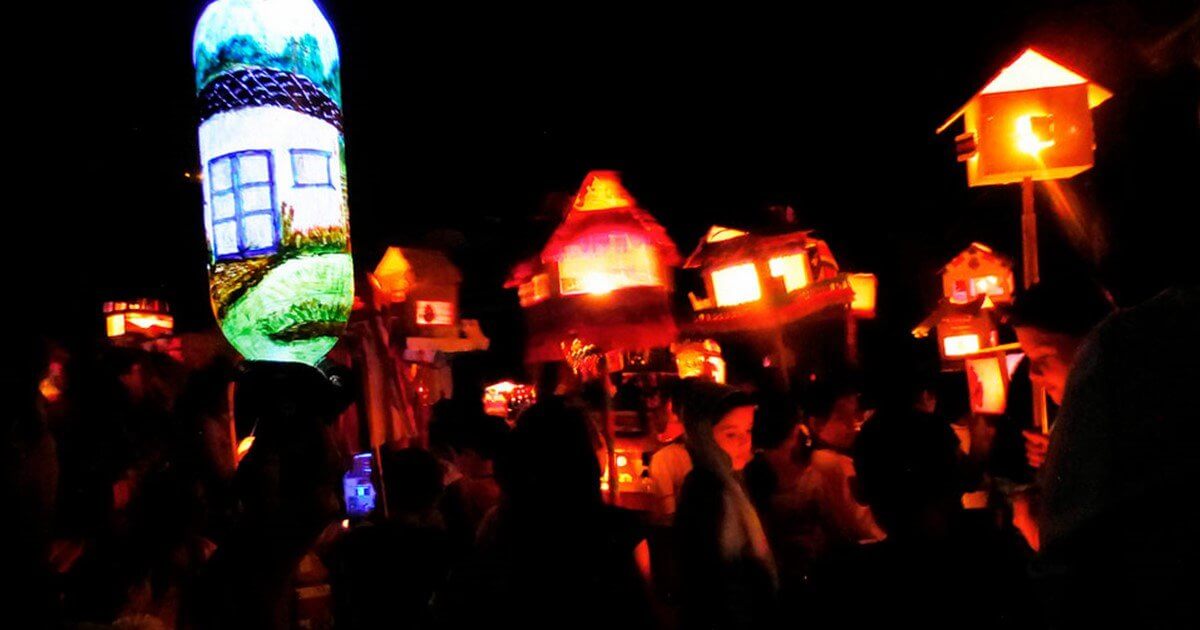
Small lights start appearing in the streets.
Children carry faroles — handmade lanterns shaped like traditional houses, churches, oxcarts, flags, animals, and other symbols of Costa Rican identity.
To understand why Costa Rican children walk with lanterns on the night of September 14, we have to return to Guatemala in 1821.
On the night of September 14, 1821, political discussions about independence were taking place in Guatemala City.
Outside, independence supporter María Dolores Bedoya and other supporters helped mobilize people to gather near the government palace and publicly express their support for independence.
The scene took place at night.
People arrived carrying lamps and torches, illuminating the streets while the political debate continued inside. The growing crowd and its calls for independence became part of the atmosphere surrounding the historic decision that would follow.
The next day, September 15, the Act of Independence was signed.
It is an image that has survived for generations: people gathering in the darkness, carrying light while waiting for a new political future.
But Costa Rica’s familiar children’s lantern parade did not begin in 1821.
That part of the story came much later.
A few hours later, the atmosphere changes again.
The September 15 Independence parades begin.
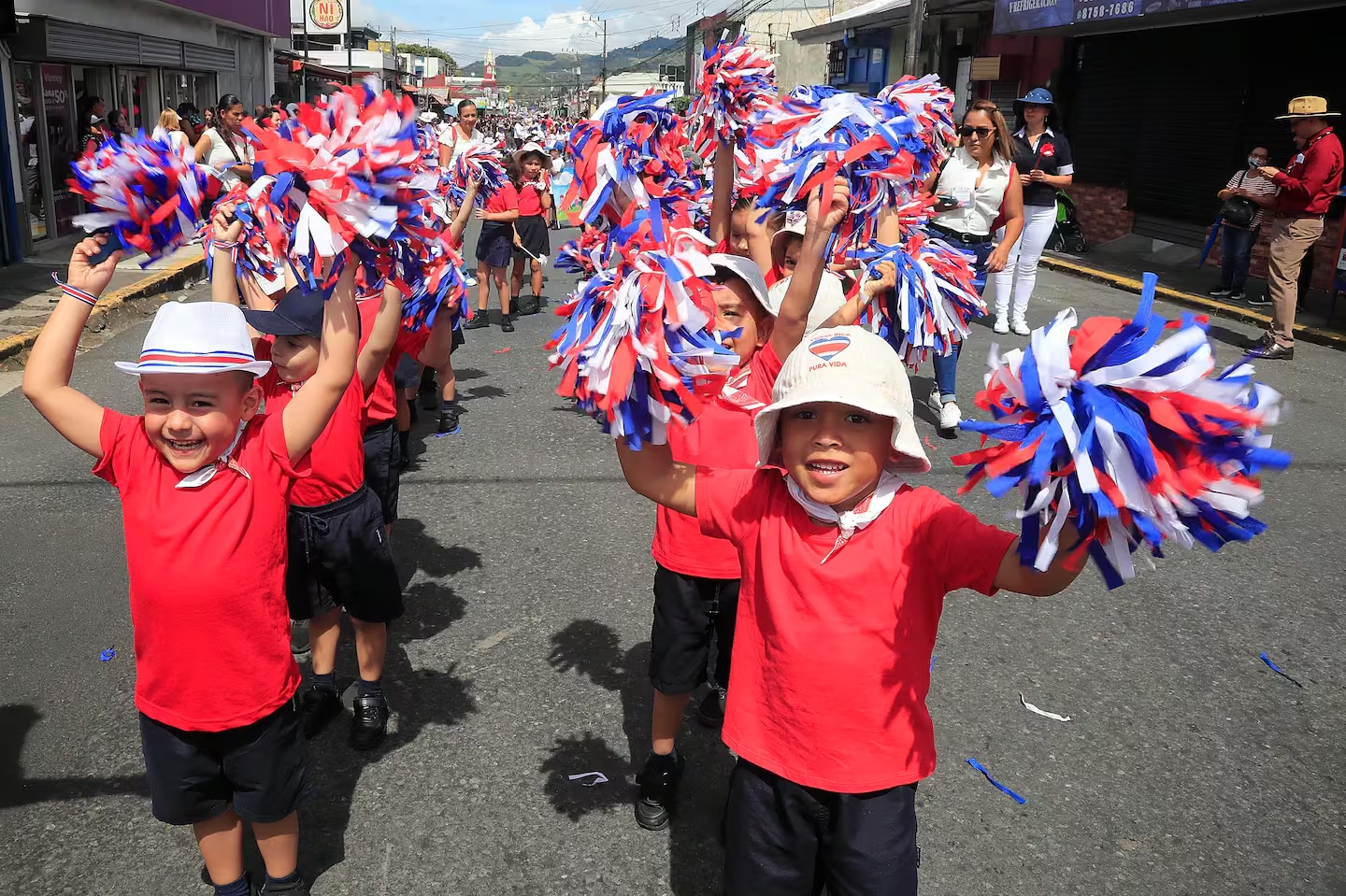
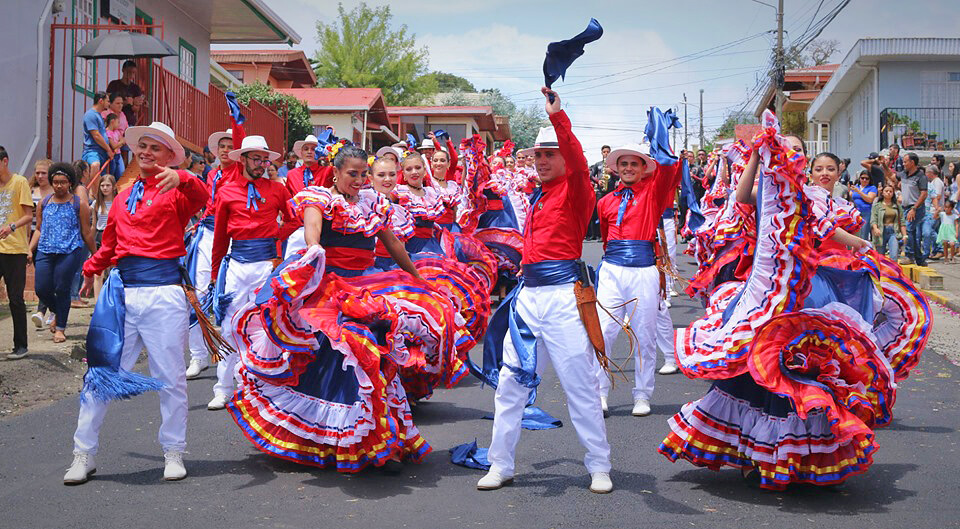
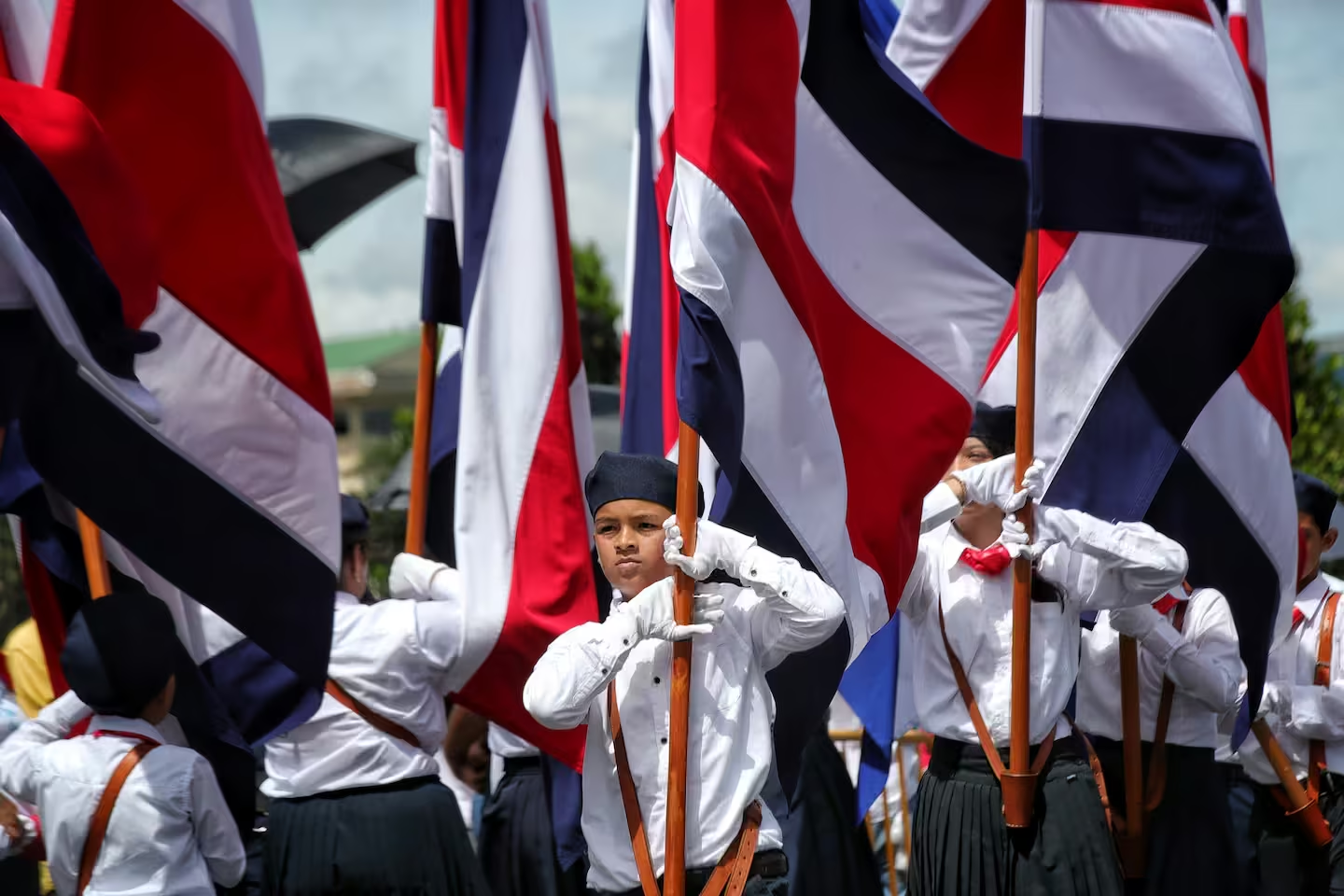
School bands fill the streets with drums, lyres, wind instruments, and carefully rehearsed routines. Students carry flags, wear traditional clothing, perform dances, and represent their schools and communities.
Families line the streets to watch.
Blue, white, and red seem to appear everywhere.
But one of the most distinctive things about Costa Rica’s Independence celebrations is that they are not concentrated in one enormous national parade.
They happen throughout the country.
From cities in the Central Valley to mountain towns, rural communities, and places along both coasts, September 15 becomes a local celebration.
Each community celebrates in its own streets.
Visitors may notice something else.
Military power is largely absent from Costa Rica’s Independence celebrations.
Costa Rica abolished its army in 1948, and the decision was incorporated into the Constitution the following year.
That history has helped give September 15 a distinctive character.
The central figures are not soldiers.
They are students.
Young people carry the flame across the country, create lanterns, play in bands, raise flags, participate in civic ceremonies, and march through their communities.
Education itself becomes part of the celebration.
It creates a different image of patriotism — one centered on civic participation, peace, community, and the transmission of history from one generation to another.
For travelers, September 14 and 15 offer an opportunity to experience a Costa Rica that exists beyond national parks, beaches, and wildlife.
On the afternoon and evening of September 14, parks, schools, and town centers become gathering places for civic activities, the National Anthem, and lantern parades.
If you happen to wake very early the following morning, listen.
Depending on where you are, you may hear the distant sound of La Diana announcing the beginning of September 15.
Later that morning, find a place near the center of town and watch the local parade.
If your journey takes you to Cartago, the celebration carries an additional historical connection. As Costa Rica’s colonial capital and the city where the independence documents were received in 1821, Cartago occupies a special place in the country’s Independence story.
Travelers should also expect temporary road closures and changes in traffic patterns around town centers during civic activities.
Sometimes the best solution is not to avoid the celebration.
It is to stop and become part of it.
You may discover a side of Costa Rica that no national park can show you.
Costa Rica’s Independence story did not begin with a battle fought on September 15.
It began with news.
A message signed hundreds of kilometers away had to travel across Central America before finally reaching Costa Rica.
More than two centuries later, the country’s traditions still seem to echo that journey.
A flame crosses borders.
On September 14, children carry light through streets after dark.
Before sunrise the next morning, music announces a new day.
And then a new generation steps into the streets where generations before them once celebrated.
Each tradition tells a different part of the story.
Together, they transform history into something that can still be carried, heard, seen, and shared.
Perhaps that is the most beautiful part of September 15 in Costa Rica.
Independence is not remembered only through monuments or history books.
It moves.
It sounds.
It shines.
And every September, Costa Rica carries the story forward once again
©2024 - 2026 GoNat Tour Operator, by Luzk. All Right Reserved