
The climb into Costa Rica’s highest forests is not measured only by elevation—it is measured by change.
The warm air of the lowlands has long disappeared, replaced by cool mountain breezes carrying the scent of damp earth and ancient trees. Trails become quieter, the forest grows shorter, and the landscape begins to reveal the subtle marks of a harsher environment. Trees no longer race toward the sky. Instead, they bend with the wind, grow slowly, and invest their energy in something far more important than height: survival.
Welcome to the Montane Wet Forest, one of Costa Rica’s highest forest ecosystems and a remarkable example of nature’s resilience.
Situated between the lush lower montane forests and the open páramo above, this life zone represents a world where every living organism has adapted to cooler temperatures, strong winds, and a growing season unlike any found in the tropical lowlands. It is a forest that rewards patience, where life unfolds more slowly, yet with extraordinary determination.
Costa Rica is famous for its tropical rainforests, but visitors are often surprised to discover that not every forest in the country feels tropical.
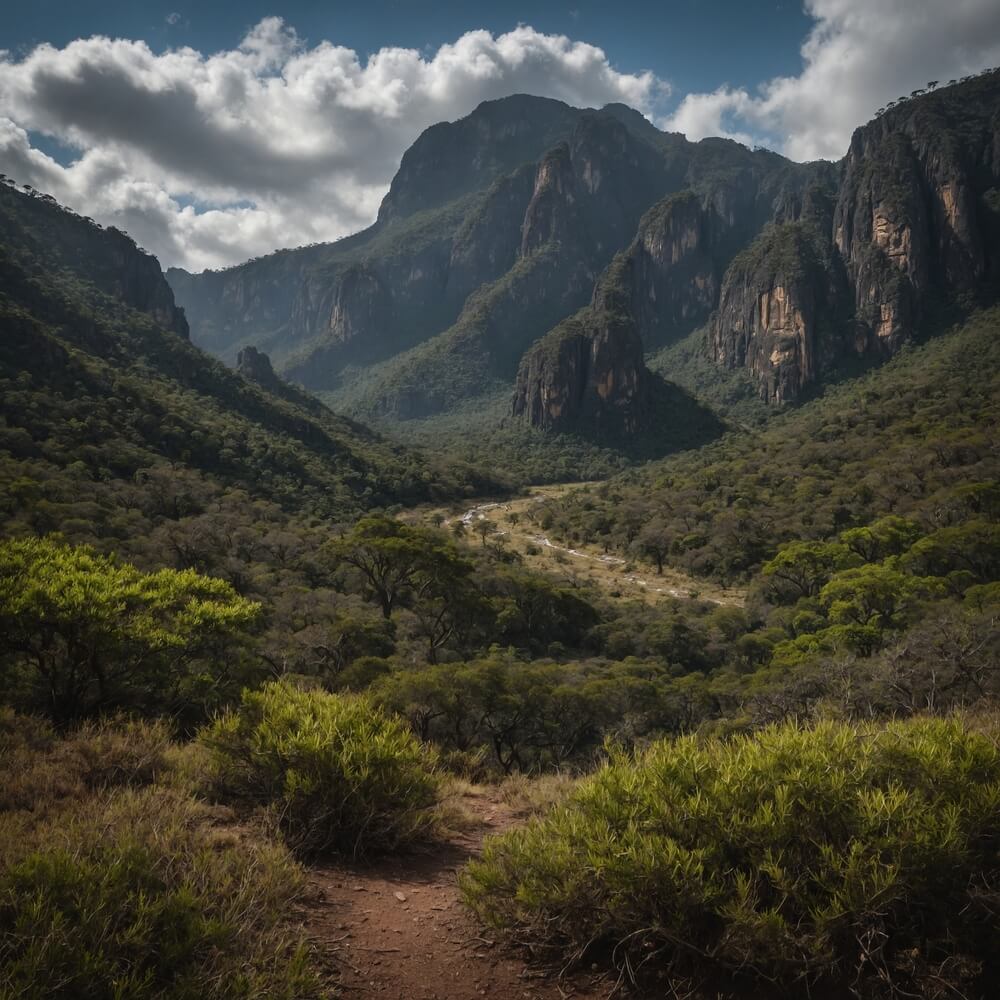
At elevations generally above 2,400 meters, temperatures remain cool throughout the year. Dense clouds frequently surround the mountains, while moisture from rain and mist continues to nourish the landscape. Yet compared to forests at lower elevations, the environment becomes increasingly demanding.
Strong winds, lower temperatures, and reduced oxygen influence how plants grow and how wildlife survives.
Rather than towering giants competing for sunlight, the forest becomes more compact and structurally complex. Every branch, every leaf, and every root reflects centuries of adaptation to mountain life.
In the Montane Wet Forest, survival is rarely about growing quickly.
Trees often develop thicker trunks, shorter crowns, and twisted branches capable of resisting persistent mountain winds. Growth rates slow considerably, allowing many individuals to live for decades—or even centuries.
Native oaks continue to dominate many areas of Costa Rica’s highest forests, creating landscapes that have become symbols of the Talamanca Mountains. Alongside them grow magnolias, shrubs, bamboo, tree ferns, and a rich community of mosses and lichens that thrive in the cool, humid climate.
Walking through these forests often feels like stepping into an ancient woodland.
Fallen trunks remain on the forest floor for years, gradually returning nutrients to the soil. Moss softens rocks and branches alike, while fungi quietly recycle organic matter beneath the leaf litter.
Everything moves at a slower pace.
Animals living at these elevations face challenges rarely encountered elsewhere in Costa Rica.
Food resources fluctuate with the seasons, temperatures can change dramatically between day and night, and suitable habitat becomes increasingly limited as the mountains rise.
The species that remain have become specialists.
Mountain birds move through the oak canopy in search of fruits and insects, while hummingbirds continue to pollinate flowering plants despite the cooler climate. Small mammals use dense understory vegetation for shelter, and amphibians depend on permanently moist microhabitats created beneath logs and rocks.
Some species occur only within Costa Rica’s highest mountain ranges, making these forests especially valuable for biodiversity conservation.
For wildlife, there is little room to move higher.
The forest itself represents the upper limit of their world.
Some of Costa Rica’s finest examples of Montane Wet Forest are protected within the country’s largest mountain reserves.
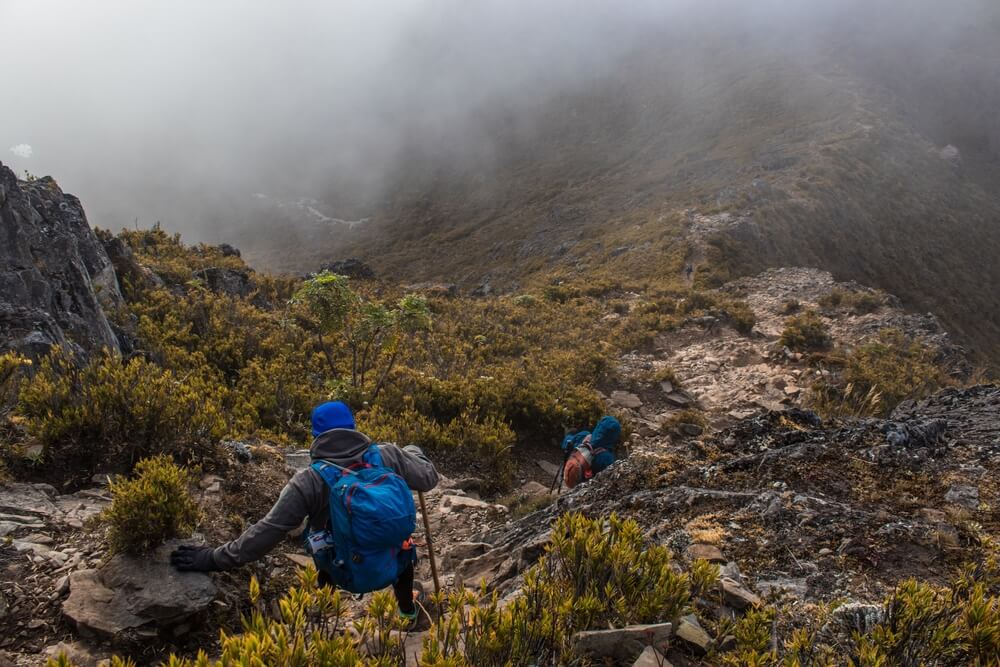
The extensive forests of Chirripó National Park preserve vast expanses of mature oak forest that blanket the slopes below the famous páramo. Hiking toward Cerro Chirripó offers visitors the opportunity to witness the gradual transformation of vegetation as elevation increases.
Nearby, La Amistad International Park protects one of Central America’s largest continuous mountain forests. Its remote landscapes safeguard countless endemic species and ecological processes that have remained largely undisturbed.
Together, these protected areas conserve some of the most intact high-elevation forests in the country, providing an invaluable refuge for wildlife adapted to life in the mountains.
Although these forests appear rugged and resilient, they perform delicate ecological functions.
Their dense vegetation protects fragile mountain soils from erosion while regulating the release of water into streams and rivers below. Thick organic layers act like natural insulation, helping maintain soil moisture even during periods of lower rainfall.
The Montane Wet Forest also serves as a biological bridge between lower forests and the alpine-like páramo.
Many species move seasonally through this elevational gradient, relying on connected habitats to complete their life cycles. Maintaining continuous forest is therefore essential not only for individual species but for the health of Costa Rica’s mountain ecosystems as a whole.
High-elevation ecosystems are among the most vulnerable to climate change.
As temperatures rise, many mountain species are forced to seek cooler conditions. Yet for organisms already living near the highest forests, there may be nowhere left to go.
Protecting large, connected areas of Montane Wet Forest helps preserve the environmental stability these species require while allowing natural ecological processes to continue.
Conservation efforts today will determine whether future generations can experience these remarkable mountain landscapes in the same way we do now.
The Montane Wet Forest does not impress through towering trees or abundant wildlife visible at every turn.
Its beauty lies in its quiet endurance.
Every wind-shaped oak, every moss-covered branch, and every slow-growing forest tells a story of persistence against the odds. Here, life has adapted not by becoming larger or faster, but by becoming remarkably resilient.
For travelers willing to venture into Costa Rica’s highest forests, this ecosystem offers something increasingly rare: the opportunity to witness nature thriving under conditions that demand patience, balance, and extraordinary adaptability.
Long before the forest gives way to the windswept páramo, these ancient highlands remind us that true strength is often measured not by how rapidly life grows, but by how gracefully it endures.
©2024 - 2026 GoNat Tour Operator, by Luzk. All Right Reserved