
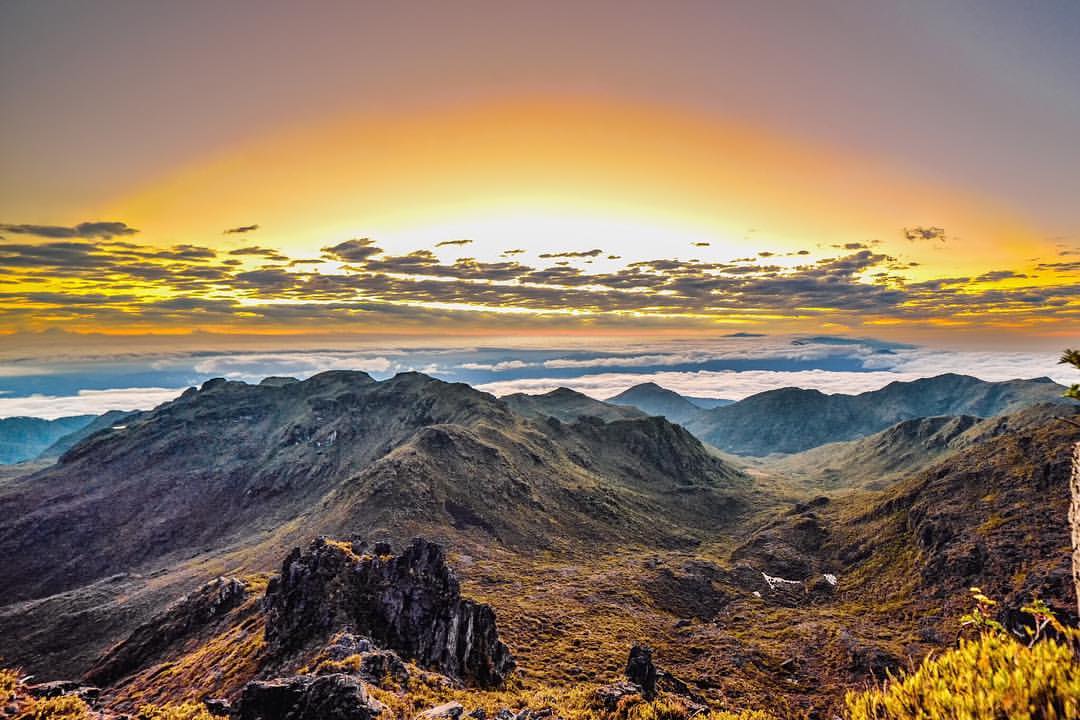
There comes a point in Costa Rica’s highest mountains where the forest simply stops.
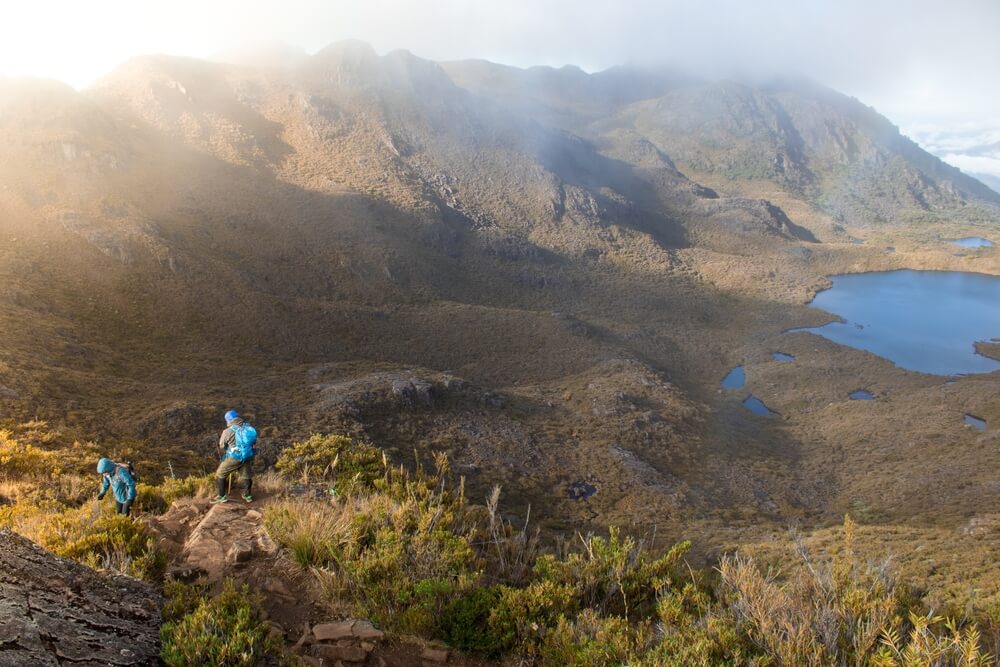
The canopy disappears. The horizon opens. Wind sweeps freely across the landscape, temperatures fall, and vegetation that once surrounded you from every direction now remains close to the ground.
For a country associated with tropical rainforests, beaches, and lush green mountains, the scene can feel almost unexpected.
This is the Subalpine Rain Páramo, or Páramo Pluvial Subalpino—the highest and coldest life zone in Costa Rica and the final destination in our journey through the country’s extraordinary ecological landscapes.
Here, survival follows different rules. There are no towering tropical trees competing for sunlight. Instead, shrubs, grasses, dwarf bamboo, and highly specialized plants endure intense solar radiation, strong winds, abundant moisture, and dramatic changes in temperature.
It may look less exuberant than the forests below, but the páramo is anything but empty.
The páramo begins where environmental conditions become too demanding for continuous forest to develop.
In Costa Rica, these landscapes occur at the highest elevations of the Cordillera de Talamanca, generally above approximately 3,000 meters. They represent only a tiny fraction of the national territory, making them one of the country’s rarest environments.
Temperature is one of the greatest challenges.
Days can bring intense sunlight, while nighttime temperatures may approach or fall below freezing. Wind moves freely across exposed ridges, and clouds can transform visibility within minutes.
For plants accustomed to these elevations, experiencing intense sunshine and near-freezing conditions within the same day is simply part of life.
This dramatic contrast is one reason the páramo looks so different from everything below it.
One of the most fascinating questions visitors can ask is also one of the simplest:
Where did the forest go?
As elevation increases, lower temperatures, wind exposure, soil conditions, and climatic stress make it increasingly difficult for trees to maintain the growth patterns seen at lower elevations.
Eventually, continuous forest gives way to open vegetation.
Instead of investing energy in height, páramo plants stay relatively low, reducing their exposure to wind and helping conserve heat near the ground. Tough leaves, compact growth forms, dense vegetation, and underground structures provide additional protection against the demanding environment.
The disappearance of trees does not mark the end of life.
It marks the beginning of an entirely different strategy for survival.
At first glance, páramo vegetation may appear simple compared with the complex layers of a tropical forest.
Look closer, and that impression quickly changes.
Grasses and shrubs dominate much of the landscape, accompanied by ferns, herbs, dwarf vegetation, and native bamboo such as Chusquea. Many species remain close to the ground, where conditions are slightly more protected from strong winds.
Some plants have thick or leathery leaves that help them cope with exposure. Others grow in dense clusters, creating their own sheltered microclimates.
These adaptations are the result of living in a place where warmth cannot be taken for granted.
Growth can be slow, and recovery from disturbance may take considerably longer than in warmer environments. A plant that looks small and unremarkable may represent years of persistence in one of Central America’s most demanding habitats.
Animals living in the páramo must be equally resourceful.
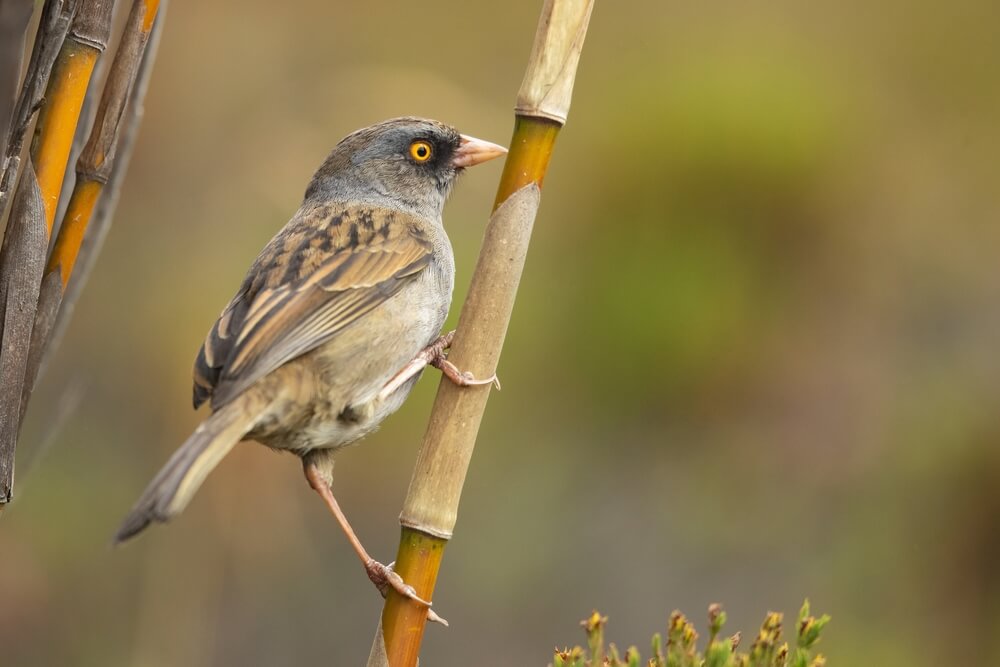
Birds are among the most noticeable inhabitants, using shrubs and open vegetation for feeding and shelter. Small mammals move through dense ground cover, while insects take advantage of brief periods of warmth and flowering.
Other animals travel between the páramo and forests below rather than remaining exclusively at the highest elevations.
This connection is important.
Although the landscape above the tree line appears dramatically different, it is not isolated from the mountain forests surrounding it. Together, they form a continuous ecological gradient that allows species to respond to seasons, food availability, and changing environmental conditions.
The páramo is therefore not the end of the ecosystem.
It is its highest expression.
Unlike many of the country’s other life zones, the Subalpine Rain Páramo has an extremely restricted distribution.
Its most famous representation occurs within Chirripó National Park, home to Cerro Chirripó, Costa Rica’s highest peak at 3,820 meters above sea level. The journey toward the summit allows hikers to experience the dramatic disappearance of high-elevation forest and the arrival of open páramo landscapes.
Extensive páramo ecosystems are also protected within La Amistad International Park and other high sectors of the Cordillera de Talamanca.
These protected landscapes are especially important because Costa Rica represents the northern edge of the broader tropical American páramo ecosystem. Far more extensive páramos occur in the northern Andes, particularly in Colombia and Ecuador, making Costa Rica’s isolated highland communities especially fascinating from an ecological and biogeographical perspective.
One of the most remarkable aspects of the Talamanca highlands is that their appearance has been influenced by a very different climatic past.
During the Pleistocene, temperatures were colder than today, and the highest portions of the range experienced glacial activity. Ancient glacial processes helped shape some of the valleys and landforms visitors can still observe around Chirripó.
As the climate warmed, cold-adapted vegetation became increasingly restricted to the highest elevations.
Today’s páramo can therefore be viewed as more than a modern ecosystem. It is also a living connection to Costa Rica’s geological and climatic history.
Walking across these highlands means crossing a landscape whose story stretches far beyond recorded human history.
The ability of páramo vegetation to survive harsh conditions can create the impression that it is indestructible.
The opposite is closer to reality.
Slow growth makes recovery difficult after disturbance. Fire, trampling, invasive species, and changing climatic conditions can alter vegetation that may require many years to recover.
Climate change presents a particularly unusual challenge.
Species living in lowlands can potentially shift toward higher ground as temperatures rise. Páramo organisms already occupy the top of the mountain. Their available habitat cannot simply continue upward indefinitely.
Protecting these highlands therefore means conserving one of Costa Rica’s most geographically limited natural environments.
From the seasonal heat of the Tropical Dry Forest to rain-soaked mountain slopes, Costa Rica’s life zones tell a story of extraordinary change across a remarkably small country.
The páramo is where that journey reaches its highest point.
Here, the forest has disappeared, but nature has not.
Life has simply changed its strategy.
Every low-growing shrub, windswept grass, and hardy mountain plant represents an answer to cold, exposure, and altitude. Together, they create a landscape that feels almost impossible to reconcile with the tropical forests far below.
Perhaps that is what makes the páramo such a fitting conclusion to Costa Rica’s life zones.
At the highest edge of the country, nature leaves us with one final lesson: biodiversity is not only about abundance. Sometimes its most extraordinary expression is found in the few species capable of thriving where almost nothing else can.
And high above Costa Rica’s forests, the páramo proves that life does not end when the trees disappear.
It simply becomes something entirely new.
©2024 - 2026 GoNat Tour Operator, by Luzk. All Right Reserved